Set of Floral Wedding Invitation Cards: Practical Uses Beyond the Aisle
When most people search for a set of floral wedding invitation cards, they are typically in the thick of wedding planning, looking for stationery that matches their venue’s garden aesthetic or spring color palette. However, the utility of these botanical designs extends far beyond matrimonial announcements. For creators, small business owners, educators, and digital marketers, a well-curated collection of floral invitation templates serves as a versatile visual asset. Understanding how to leverage these resources across different contexts can save time, elevate brand consistency, and provide immediate value to clients or audiences who appreciate organic, nature-inspired design.
Defining the Asset in a Modern Context
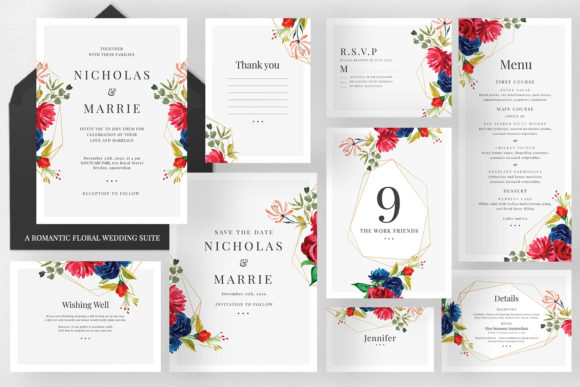
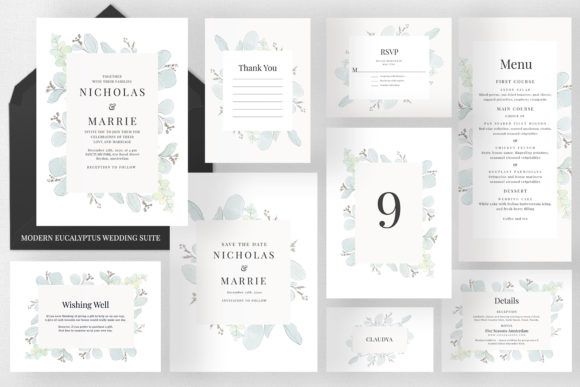
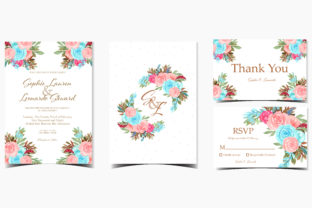
A set of floral wedding invitation cards is rarely just a single JPEG file. In practical terms, it is usually a comprehensive design system comprising editable templates, layered vector graphics, high-resolution watercolor textures, and coordinated typography pairings. Whether you are working with Adobe Illustrator, Canva, Photoshop, or Procreate, these sets function as modular building blocks rather than static images.
The distinction matters because it dictates how you use them. A static image limits you to printing exactly what you see. A true set allows you to deconstruct the florals, rearrange the composition, adjust opacity for background use, or isolate specific blooms for social media headers. This modularity is what transforms a wedding-specific product into a multi-purpose creative tool for freelancers and entrepreneurs who need professional-grade botanical assets without hiring an illustrator from scratch.
Commercial Applications for Freelancers and Agencies
For graphic designers and marketing freelancers, maintaining a library of floral invitation sets is a strategic business move. Clients often request "soft," "organic," or "feminine" branding on tight deadlines. Creating custom botanical illustrations for every project is cost-prohibitive and time-consuming. Having a licensed set of floral wedding invitation cards with flowers allows you to deliver premium aesthetics at a mid-tier price point while protecting your profit margins.
Consider a freelance designer tasked with rebranding a local skincare line. The client wants packaging and social media assets that evoke natural ingredients. By adapting the corner elements and border motifs from a floral invitation set, the designer can create cohesive packaging labels, Instagram story templates, and email newsletter headers that feel bespoke. The key here is transformation; the original wedding context becomes irrelevant once the elements are recolored and integrated into a commercial identity system.
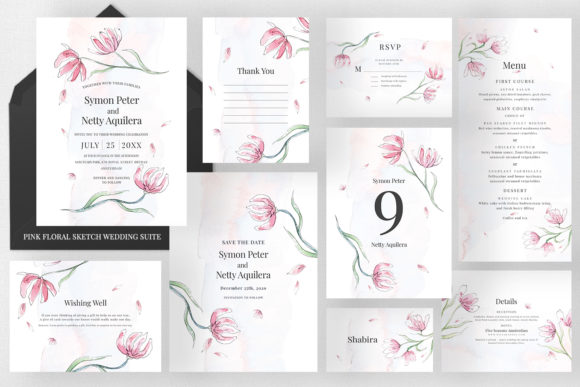
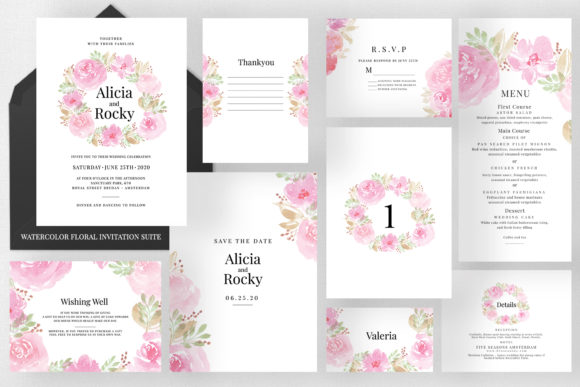
This approach also benefits print-on-demand sellers and stationery shop owners. Instead of designing one-off products, you can develop entire collections based on a single floral set. A peony-themed invitation suite can easily translate into matching thank-you cards, bridal shower signage, and even digital planner stickers. This maximizes the return on investment for the initial asset purchase and ensures visual consistency across a product line, which is crucial for building brand recognition in crowded marketplaces like Etsy or Creative Market.
Educational and Non-Profit Use Cases
Educators and non-profit organizers frequently operate with limited budgets but high aesthetic standards. A set of floral wedding invitation cards offers an accessible solution for creating polished communications without institutional design fees. Teachers might use delicate wildflower borders to frame certificates of achievement, classroom welcome signs, or parent-teacher conference flyers. The softness of floral imagery can make administrative documents feel more welcoming and less bureaucratic, fostering a warmer connection with families.
Similarly, non-profits hosting galas, fundraisers, or community workshops often rely on volunteer labor for design work. Using a pre-made floral set ensures that event invitations look professional and trustworthy, which directly impacts donor perception and attendance rates. When a volunteer uses a cohesive set of floral wedding invitation cards with flowers for both the physical invite and the digital RSVP page, it signals organizational competence. The familiarity of floral motifs also transcends cultural and generational barriers, making it a safe yet elegant choice for diverse community outreach efforts.
Digital Content Creation and Blogging
Bloggers, influencers, and content creators in the lifestyle, wellness, and beauty niches face constant pressure to produce visually engaging thumbnails and pins. Floral invitation sets serve as excellent overlays for text-heavy graphics. The negative space typically designed for wedding details in these templates is perfectly sized for blog titles or video hooks.
For example, a food blogger sharing a spring salad recipe could use a wreath element from a floral invitation set to frame the dish photo, instantly signaling seasonality and freshness. Digital marketers promoting webinars or e-books can adapt formal invitation layouts into lead magnet covers or webinar registration pages. The psychological association between floral invitations and "special occasions" can subtly increase perceived value and click-through rates compared to generic stock photography backgrounds.
Adapting Traditional Formats for Digital Platforms
- Social Media Stories: Resize portrait-oriented invitation templates to 9:16 ratio, utilizing the floral borders as frames for user-generated content or polls.
- Email Signatures: Extract subtle floral accents to create branded dividers or signature backgrounds that maintain professionalism without overwhelming the text.
- Pinterest Pins: Leverage the vertical orientation of standard invitation cards to create high-performing pin templates that stand out in feeds dominated by minimalist designs.
- Website Hero Sections: Use wide-format floral arrangements from landscape invitation variants as subtle header backgrounds, reducing bounce rates through improved visual appeal.
Critical Considerations Before Acquisition
Before downloading or purchasing a set of floral wedding invitation cards, users must evaluate technical compatibility and licensing restrictions. It is not enough to simply like the visual style; you must ensure the asset fits your workflow and intended use case. Always verify whether the files are provided in formats you can actually edit. A PSD file is useless if you only have access to Canva, and SVG files may require conversion for certain embroidery or engraving machines.
Licensing is equally critical for commercial users. Many sets marketed as "wedding invitations" carry personal-use-only licenses. If you plan to use the florals for client work, merchandise, or digital products, you must secure a commercial or extended license. Ignoring this distinction exposes creators and businesses to legal risk. Additionally, check for exclusivity clauses; some licenses prohibit using the same floral elements in logos or trademarks, which would limit long-term branding applications.
Finally, consider the resolution and scalability. Watercolor florals are raster-based and can pixelate when enlarged. Vector-based floral sets offer infinite scalability for large-format printing like banners or trade show displays. If your use case involves both business cards and event backdrops, prioritize sets that include both high-DPI PNGs and vector AI/EPS files. Assessing these technical and legal parameters upfront prevents costly mistakes and ensures the set delivers lasting value across multiple projects.
Maximizing Value Through Customization
The true power of a set of floral wedding invitation cards with flowers lies in customization. Users should resist the temptation to use templates as-is, especially in commercial or public-facing contexts. Simple modifications like adjusting hue/saturation, applying blend modes, or combining elements from different sets can create entirely unique compositions. This not only avoids duplicate content issues in SEO-sensitive environments but also aligns the visuals more closely with specific brand identities.
For educators and hobbyists, layering florals over textured paper backgrounds or integrating hand-lettered fonts can add tactile warmth to digital outputs. Marketers should test different floral densities; sometimes less is more, and stripping back an ornate invitation template to a single stem creates a cleaner, more modern aesthetic suitable for tech-adjacent wellness brands. Treating these sets as raw materials rather than finished products unlocks their full potential, transforming a niche wedding resource into a cornerstone of diverse creative and professional workflows.