Evaluating Floral Scissors SVG Assets for Professional Crafting Workflows
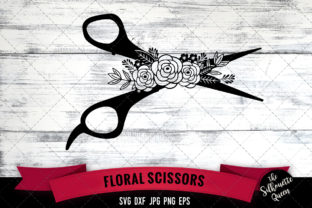
In the competitive landscape of custom merchandise and digital design, the distinction between amateur and professional output often lies in the quality of foundational assets. The Floral Scissors design represents a specific niche within the broader category of craft vectors, merging functional tool imagery with organic botanical elements. For creators utilizing platforms like Cricut or Silhouette, this type of asset serves as more than mere decoration; it is a functional component for branding, packaging, and product development. Understanding the technical specifications and practical applications of this Floral Scissors cut file is essential for designers who require reliability and versatility in their production pipelines.
Technical Composition and File Integrity
The value of any digital cutting file is determined by its technical execution across multiple formats. This specific Floral Scissors package is structured to accommodate diverse software ecosystems and output requirements. A comprehensive asset bundle must eliminate friction during the import process, and this collection addresses that need through five distinct file types.
- SVG File: The primary vector format for electronic cutting machines. This file maintains mathematical precision regardless of scaling, ensuring that intricate floral details on the scissors remain crisp whether applied to a small sticker or a large tote bag.
- DXF File: Essential for users of the free version of Silhouette Studio, which does not natively support SVG imports. The inclusion of a DXF ensures accessibility without requiring software upgrades.
- EPS File: The industry standard for professional vector editing in Adobe Illustrator or CorelDRAW. This format allows advanced users to modify node structures, recolor individual elements, or integrate the Floral Scissors into larger composite designs without quality loss.
- PNG File (300 DPI): Provided with a transparent background, this raster image is critical for sublimation printing, web mockups, and digital planning. The 300 DPI resolution ensures print clarity, while transparency allows for seamless layering over colored substrates.
- JPG File (300 DPI): Featuring a white background, this format serves as a universal fallback for basic viewing, quick proofs, or platforms that do not support transparency. It provides a reliable reference point for color accuracy.
This multi-format approach mitigates compatibility risks. Professionals understand that workflow bottlenecks often occur when a file requires conversion or cleanup before use. By providing native files for both vector editing and raster printing, this Floral Scissors asset supports a linear workflow from concept to physical production.
Design Utility and Aesthetic Versatility
The "Cute Cut File" designation suggests a specific stylistic direction, but practical evaluation requires looking beyond surface aesthetics. The integration of flowers with scissors creates a visual metaphor relevant to multiple industries. Unlike generic floral patterns, the inclusion of the cutting tool anchors the design in the realm of creation, tailoring, and craftsmanship.
For apparel decorators, this design functions effectively as a pocket-sized emblem or a sleeve detail. The silhouette is generally compact, making it suitable for areas where space is limited but visual interest is required. In the stationery sector, the Floral Scissors motif works exceptionally well for thank-you cards included in handmade orders, reinforcing the artisan nature of the business. Educators and homeschoolers may utilize the graphic for sewing curriculum materials or creative arts worksheets, where the visual association between tool and nature softens the technical aspect of the subject matter.
The balance between the mechanical scissor shape and the organic floral elements requires careful node management. Poorly digitized files in this genre often suffer from jagged curves or disconnected layers. When evaluating this asset, one should verify that the intersection points between the metal blades and the flower stems are clean. Properly executed, these intersections allow for multi-color vinyl layering without excessive weeding or registration issues. The design’s success relies on this structural integrity, transforming a simple illustration into a manufacturable product.
Performance Across Cutting Platforms
Real-world performance varies significantly based on hardware and material selection. Users operating Cricut Maker or Explore series machines will find the SVG file optimizes automatically within Design Space. However, the true test of a Floral Scissors cutting file emerges during the weeding process. Intricate floral details can become problematic if line weights are too thin for the chosen vinyl or cardstock.
When working with adhesive vinyl, particularly glitter or holographic varieties, the internal negative spaces of the flowers may present challenges. Professional operators recommend performing a test cut at reduced speed to ensure blade precision. The vector paths in high-quality EPS and SVG files should be continuous rather than fragmented, reducing the number of blade lifts and improving overall cut time. For Silhouette Cameo users importing via DXF, checking the weld status of overlapping elements is crucial. Occasionally, DXF conversions separate grouped objects; verifying that the scissors and flowers act as a single compound path prevents misalignment during multi-layer assembly.
Sublimation users leveraging the 300 DPI PNG will appreciate the transparent background for polyester blends. The resolution is sufficient for items up to approximately 8x10 inches without pixelation. For larger applications, such as full-coverage tumblers or pillows, utilizing the EPS file to generate a higher-resolution export is advisable. This flexibility highlights the importance of retaining source vector files even when immediate needs are raster-based.
Commercial Viability and Licensing Considerations
For entrepreneurs and small business owners, the return on investment for digital assets depends on licensing terms and market saturation. While the Floral Scissors design offers aesthetic appeal, its commercial value is tied to how uniquely it can be integrated into a product line. Using the asset "as-is" places the creator in direct competition with others using the same file. Professional differentiation requires modification.
The inclusion of the EPS file is the key differentiator here. It permits legitimate customization: altering petal shapes, adjusting blade angles, or combining the scissors with brand-specific typography. This adaptability extends the asset's lifespan and protects the uniqueness of the final product. Marketers and content creators can also leverage the JPG and PNG versions for social media templates, blog headers, or email newsletters, creating cohesive brand identity across digital and physical touchpoints.
Users must always verify the specific license accompanying the download. Some "Cute Cut Files" are restricted to personal use only, while others permit limited commercial production. Understanding these boundaries is part of professional risk management. Assuming commercial rights without verification can lead to platform takedowns or legal issues. This Floral Scissors package appears positioned for serious hobbyists and micro-businesses, but due diligence regarding usage rights remains the responsibility of the purchaser.
Practical Limitations and Workflow Integration
No digital asset is without limitations. While the Floral Scissors design is versatile, it may not suit every project scope. The stylized nature of "cute" cut files sometimes sacrifices anatomical accuracy for charm. For clients requiring technical precision—such as professional tailoring guilds or medical embroidery—the whimsical interpretation might appear too informal. Evaluating audience expectations before committing to this aesthetic is necessary.
Additionally, file organization impacts long-term utility. With five distinct files per design, asset management becomes critical. Professionals should establish a consistent naming convention and folder structure immediately upon download. Separating source vectors (SVG, EPS, DXF) from raster outputs (PNG, JPG) streamlines retrieval during high-pressure production cycles. Relying on default filenames often leads to duplication and version control errors.
Color separation presents another practical consideration. If the Floral Scissors design contains gradients or shading intended for print, it may not translate directly to layered vinyl cutting. Users intending to produce physical decals must be prepared to simplify colors or utilize printable vinyl methods. Recognizing the difference between a print-ready PNG and a cut-ready SVG prevents material waste and production delays.
Strategic Assessment for Creators
The decision to incorporate this Floral Scissors asset into a creative library should be based on workflow alignment rather than impulse. For makers focused on sewing, quilting, or feminine crafts, the thematic relevance is immediate and strong. The availability of both DXF and SVG formats ensures cross-platform compatibility, making it a safe acquisition for studios with mixed hardware environments.
From a quality perspective, the provision of 300 DPI raster files alongside editable vectors demonstrates an understanding of professional standards. Many marketplace assets offer only low-resolution PNGs or locked SVGs, limiting their utility. This package’s comprehensiveness suggests it was prepared with production in mind, not just display. However, the ultimate value is realized only through active customization. Treat this Floral Scissors file as a raw material rather than a finished product. By modifying colors, scaling elements, and integrating the motif into broader design systems, creators can extract maximum value while maintaining distinct brand identity.
For educators and bloggers, the dual-format delivery supports both digital content creation and physical classroom aids without requiring additional software purchases. The transparency of the PNG facilitates easy insertion into existing layouts, while the white-background JPG serves archival and proofing purposes. This duality reduces the need for external editing tools, saving time for professionals managing multiple responsibilities.
In summary, this Floral Scissors cut file meets the technical and aesthetic requirements of modern digital fabrication when used appropriately. Its strength lies in format diversity and thematic specificity. Success depends on the user’s ability to leverage the editable vector components for customization and to respect the technical constraints of their chosen output method. For those operating within the crafting, education, or small-scale manufacturing sectors, it represents a functional, adaptable resource worthy of integration into a professional asset library.